
10 signs your hotel needs F&B mobile ordering now - and the solutions to fix every one of them

From order errors to lost revenue, these are the friction points quietly costing your hotel money, staff morale, and guest loyalty - and how mobile ordering solves each one.
The modern hotel guest expects frictionless everything. They book on their phone, check in on their phone, and increasingly they want to order food and drinks on their phone too. Yet a lot of hotel F&B operations are still running manual processes that were never built for today's guest expectations.
If any of the following signs sound familiar, it's time to act.
1. Operations: Your staff are drowning at peak times - and idle at other times
Hotel F&B staffing is a constant balancing act. During breakfast peak times or busy evenings, your team can barely keep up. But an hour later, staff are standing around in areas that have gone quiet with nothing productive to do. Manual ordering processes make this worse - phones ring at the front desk, staff field calls, hunt down modifiers, check availability, and relay everything by hand.
That's time and energy consumed by process, not by hospitality. Meanwhile, guests in quieter areas like poolside or the lobby simply go unserved because there's no one nearby to take their order.
How mobile ordering fixes it
Mobile ordering enables guests to self-serve, wherever they are and frees up staff time. That means the front desk stops fielding F&B calls, staff are no longer tied to a physical section or waiting to take an order before a guest can be served.
Your team is available for meaningful, high-value guest interactions - checking in on tables, handling special requests, maintaining standards - instead of being consumed by process admin. You can also extend service reach to areas that were previously too under-resourced to staff properly.
2. Bottom line: You're leaving serious revenue on the table
Upselling in hotel F&B is notoriously inconsistent. It depends on individual staff confidence, timing, and whether a guest can even be approached. Guests in their room, by the pool, or in the lobby may never be prompted to order at all — there's no one there to suggest it.
Orders that do come through verbal channels rarely surface add-ons or related items. Breakfast pre-orders are low because the process is clunky. The result is that significant potential revenue simply goes uncaptured - not because guests don't want to spend, but because the conditions to do so aren't in place.
How mobile ordering fixes it
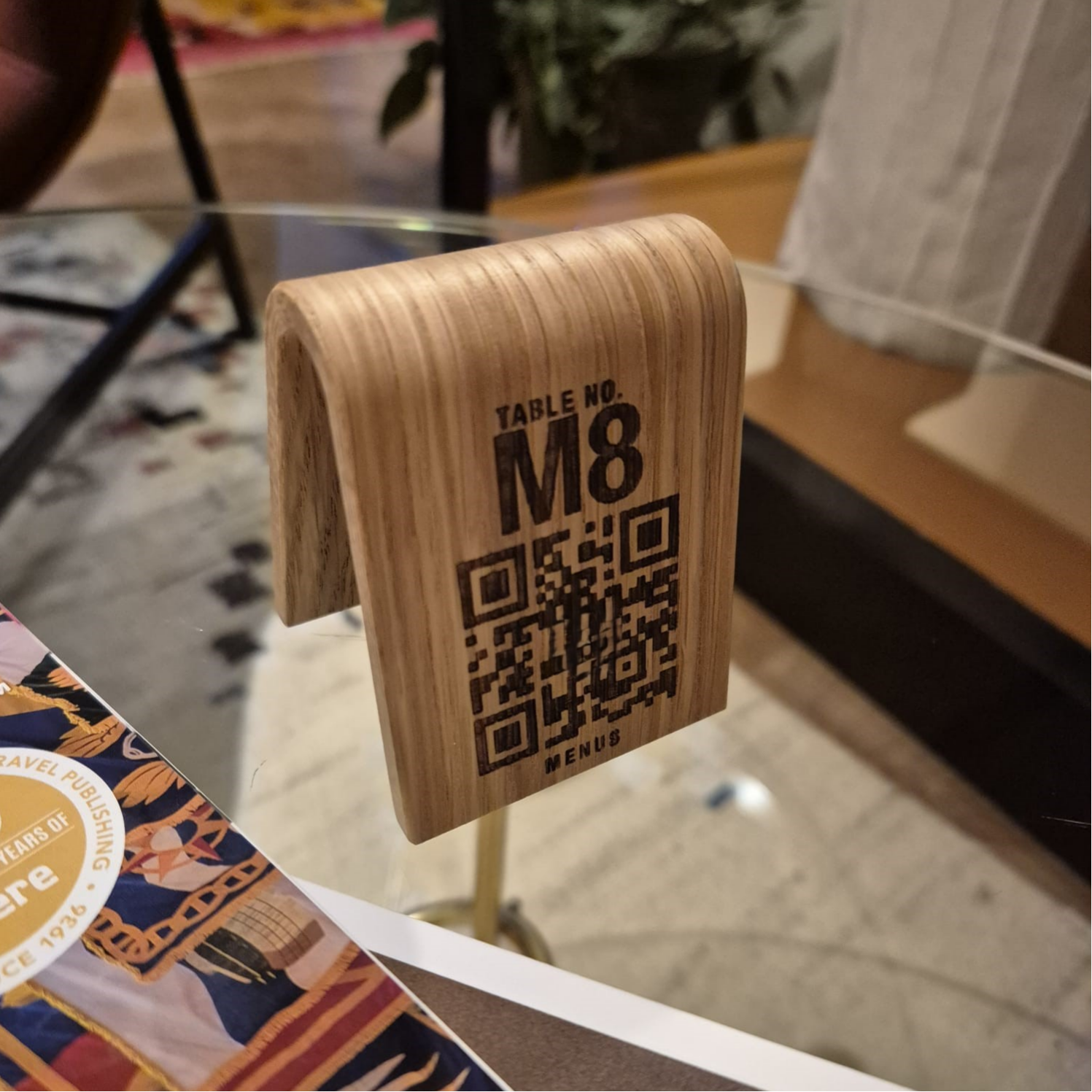
A QR code gives guests ordering access whenever and wherever the moment takes them - room, pool, bar, lobby. Digital menus highlight upsells, related items, and promoted specials automatically at the point of decision. Images of the meals entice guests even further. Pre-order flows make breakfast capture effortless.
The ordering experience is always-on, always-available, and always consistent- and the numbers reflect it.
+30% average increase in spend per order with digital vs traditional ordering.
3. Group consistency: Your portfolio has too many different platforms
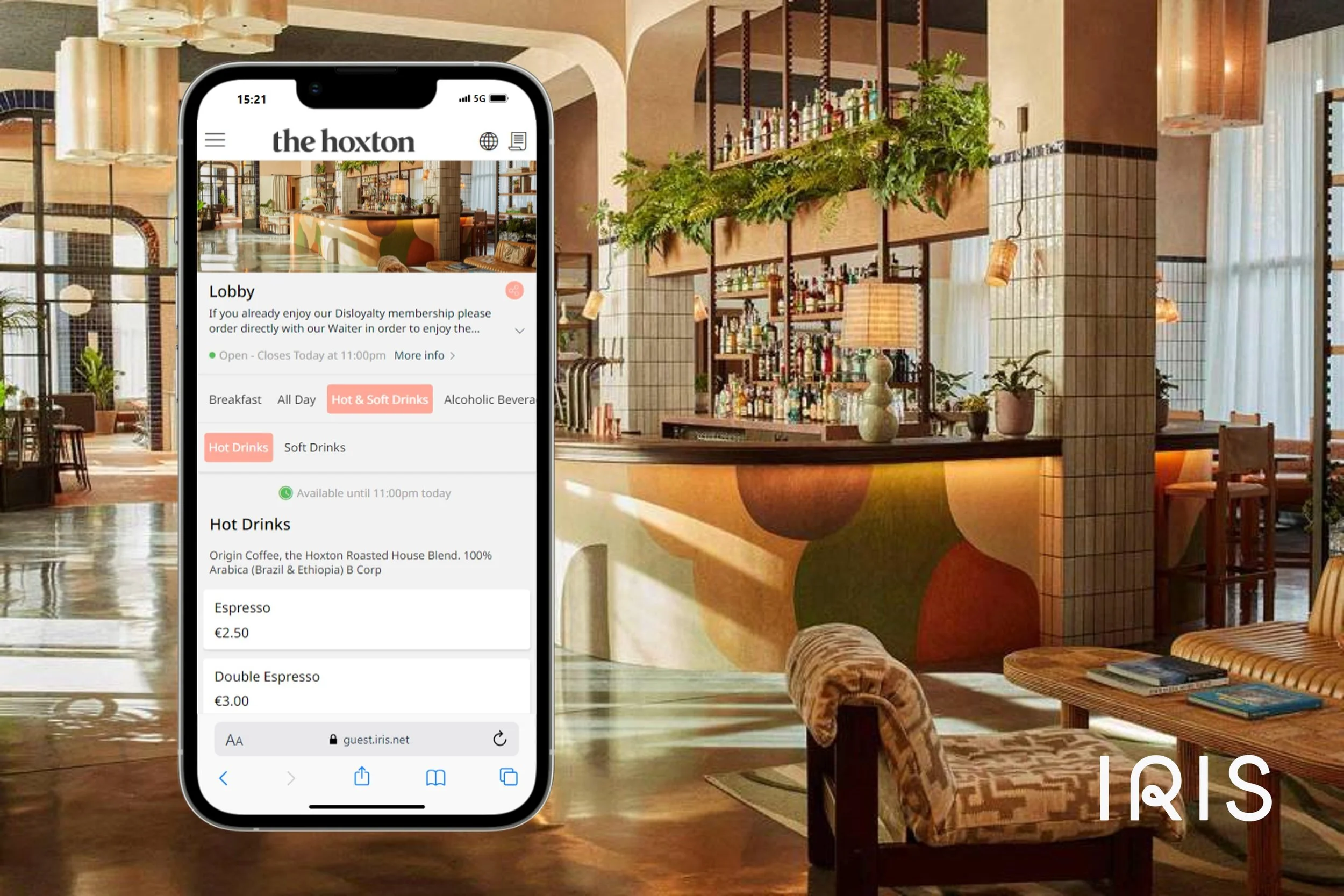
Hotel groups and management companies with multiple properties and brands might be running a variety of mobile ordering platforms depending on the local POS in situ. Inconsistent for staff, inconsistent for guests, and impossible to scale.
A frequent traveller who stays across several hotels in your group encounters a completely different ordering experience at each one - different flow, different look, different quality. That inconsistency quietly undermines brand trust and makes loyalty harder to earn and maintain. Operationally, staff who move between properties must learn different interfaces, different admin processes, and different workflows. The experience should feel like your brand everywhere. Right now, it probably doesn't.
How mobile ordering fixes it
A single mobile ordering platform deployed across your entire portfolio (irrespective of local POS) brings everything into alignment. Guests experience one consistent, branded ordering journey at every property they visit. Menus, promotions, and pricing are managed centrally, with the flexibility to customise at property level where needed.
Staff learn one system, one interface, one process. For groups serious about brand consistency and scalable operations, a unified, POS agnostic platform isn't a nice-to-have. It's the foundation everything else is built on.
4. Service speed: Guests are waiting too long - and noticing

Long wait times are one of the top complaints in hotel F&B reviews. And the frustrating reality is that much of that wait isn't spent cooking - it's spent in the ordering pipeline. The guest decides what they want, waits to flag down a server or gets through to the front desk, the order is taken manually, passed to the kitchen, and only then does the actual preparation begin.
Each stage adds minutes. During busy periods, those minutes stack up. Guests who ordered room service expecting a relaxing experience find themselves checking their watch instead.
How mobile ordering fixes it
Mobile ordering compresses the entire ordering process into seconds. The guest places their order and it travels directly to the kitchen POS to be prepped immediately - no relay, no delay. One process eliminated entirely.
Kitchen teams can start working faster, delivery times improve, and guests spend their time relaxing rather than wondering what's happening. It's a structural improvement to speed that no amount of staff training can replicate.
5. Integrations: Your platforms aren't talking to each other
Many hotels find themselves managing F&B across a patchwork of disconnected systems - a POS here, a digital menu platform there, maybe a separate PMS platform too. The result is duplicated effort: menus get updated in one place but not another, prices go out of sync, and someone on the team is manually uploading changes to multiple platforms to try and keep everything consistent.
It's time-consuming, error-prone, and a constant source of operational friction that your guests eventually notice in the form of wrong prices or unavailable items still showing.
How mobile ordering fixes it
IRIS integrates directly with your POS, creating a single source of truth for your menu. Changes made in one place propagate automatically - no manual uploads, separate systems or database matches.
Your team manages one menu, guests see accurate information, and the kitchen receives orders directly into the same system it already uses. Integration removes the duplication and puts everything in sync.
6. Order accuracy: Your kitchen is receiving the wrong orders
Order errors are one of the most visible and damaging problems in hotel F&B. A guest calls in, a staff member takes the order by hand or memory, relays it to the kitchen and somewhere along that chain, a modifier gets dropped, an allergen note gets missed, or an item goes down wrong.
The result is a frustrated guest waiting longer than expected for food that isn't what they asked for. It damages trust immediately, and it's surprisingly hard to recover from. The problem compounds at scale: the more orders flowing through your team, the more chances there are for something to go wrong.
How mobile ordering fixes it
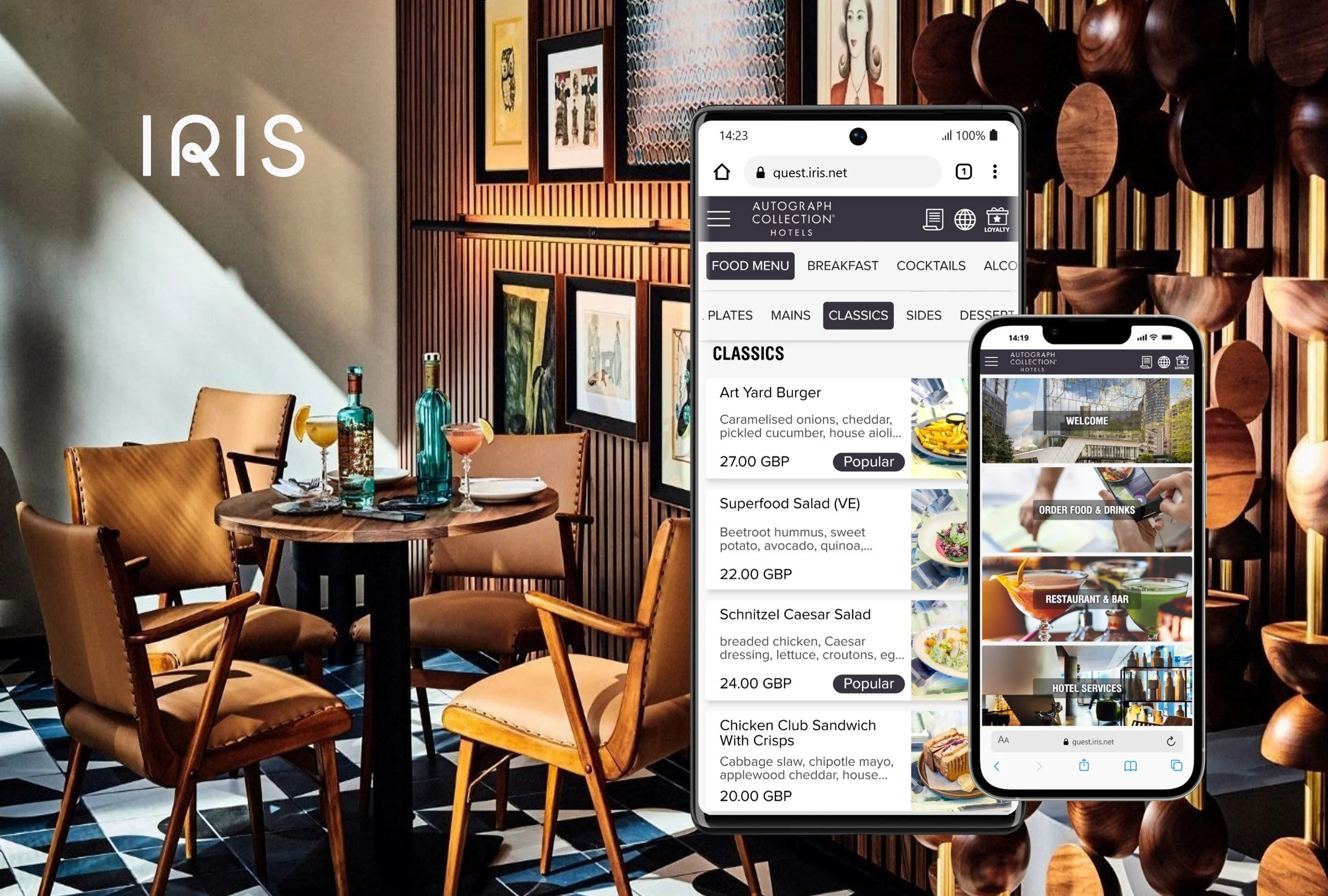
With mobile ordering, guests build their own order from start to finish. They select modifiers, specify dietary preferences, filter by allergen, review the full ingredients list, and add a direct note to the kitchen - all before they hit submit. There is no relay, no misinterpretation, no dropped detail. The order that reaches the kitchen is exactly the order the guest intended. Errors don't just decrease, they effectively disappear.
7. Competition: Guests are ordering from Deliveroo & DoorDash instead of from you
Third-party delivery apps have set a high bar for the ordering experience: slick interfaces, easy browsing, quick checkout, real-time tracking. When a hotel's own ordering process feels clunky or inaccessible by comparison, guests simply reach for the app they already trust.
That's revenue leaving your property entirely, along with the opportunity to control the experience, the presentation, and the margin. It's a direct competitive threat that many hotels are slow to acknowledge.
How mobile ordering fixes it
IRIS gives hotels a digital ordering experience that matches — and in many ways exceeds — what third-party apps offer. The interface is intuitive, browsable, and fast. But the product itself is fundamentally better: hotel food is cooked on-site, handled less, and delivered directly to the guest's room or table. No third-party driver, no packaging compromises, no cold handoffs.
When the digital experience is there to match, guests will choose the fresher, faster, in-house option every time.
8. Content: Guests are reading out-of-date information
Printed menus have a shelf-life problem. The moment a seasonal dish changes, an item runs out, or a price is adjusted, every copy in every room becomes inaccurate. Reprinting is costly and slow. In the meantime, guests order items that are unavailable, encounter prices that have changed, or miss out on a promotion that wasn't in place when the menu was last printed.
It erodes confidence in your operation and creates awkward moments for your staff who have to explain the discrepancy. For groups with multiple properties, keeping printed menus consistent across the portfolio becomes an ongoing logistical headache.
How mobile ordering fixes it
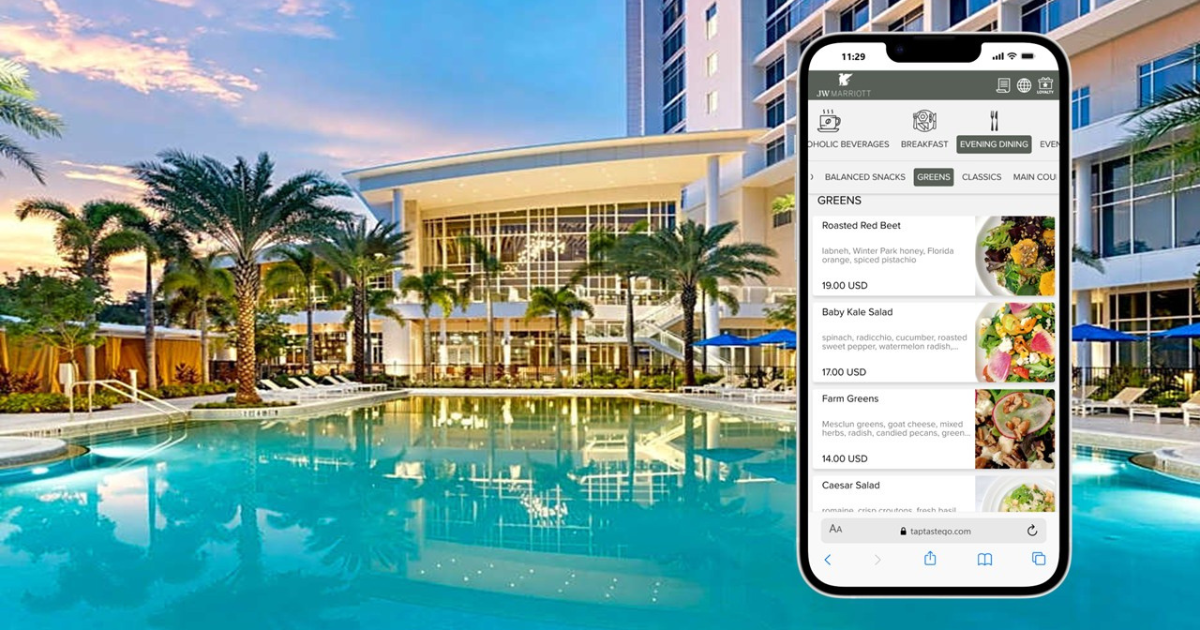
Digital menus can be updated in minutes, from anywhere. Remove a sold-out item, adjust a price, add a seasonal special, or push a limited-time promotion - guests see the change immediately, across every device, at every property.
No reprints, no version confusion, no staff having to apologise for menu discrepancies. What guests see is always accurate, always current, and always on-brand.
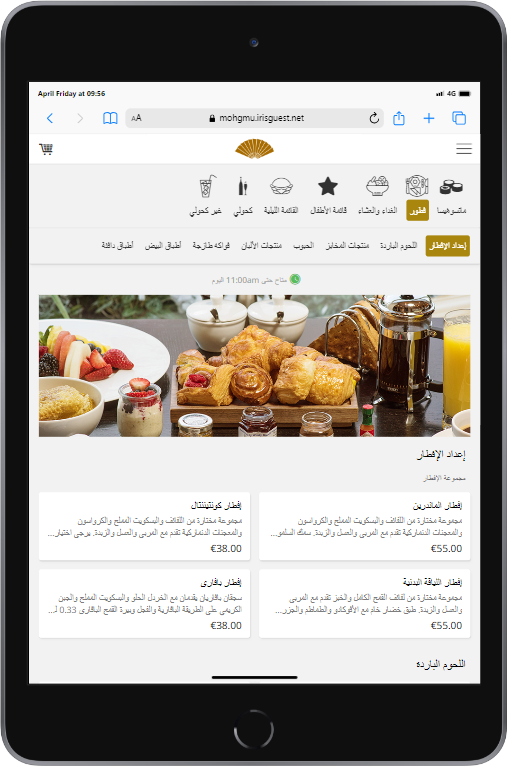
9. Communication: Language barriers are getting in the way
Language barriers in F&B can create real friction. A guest who isn't confident in English may struggle to communicate dietary needs, understand menu descriptions, or ask questions about ingredients. They might order something they didn't intend, skip ordering altogether because it feels too difficult, or have an experience that falls short of what they'd hoped for - none of which reflects well on your hotel. Staff may also find these interactions stressful.
How mobile ordering fixes it
IRIS supports multi-lingual menus that guests can switch to their native language instantly. Every item, description, modifier, and allergen label is available in their chosen language so they can browse with full confidence, order accurately, and feel genuinely catered for.
No awkward exchanges, no miscommunication, no moment where a guest feels like a burden. The same quality experience, in the language that works for them.
10. Loyalty: Negative reviews are hurting your reputation & staff tips
Guest dissatisfaction in F&B rarely stays private. A wrong order, a long wait, a clunky payment process, or food that doesn't match what was advertised - these experiences generate the kind of feedback that ends up on TripAdvisor and Google.
For hotel groups, inconsistency across properties compounds the problem: a guest who has a great experience at one location and a poor one at another leaves with a fractured impression of the brand. Bad reviews are difficult and slow to undo, and their impact on future bookings is measurable.
How mobile ordering fixes it
Mobile ordering addresses most of the root causes of F&B complaints in one move - accuracy improves, speed improves, payment is integrated and frictionless, and menu information is always correct.
For hotel groups, a centralised platform means the guest experience is consistent across every property: same flow, same quality, same brand presentation. That consistency builds genuine loyalty. Staff who spend less time firefighting process problems also deliver warmer, more attentive service - which drives tips and better reviews in equal measure.
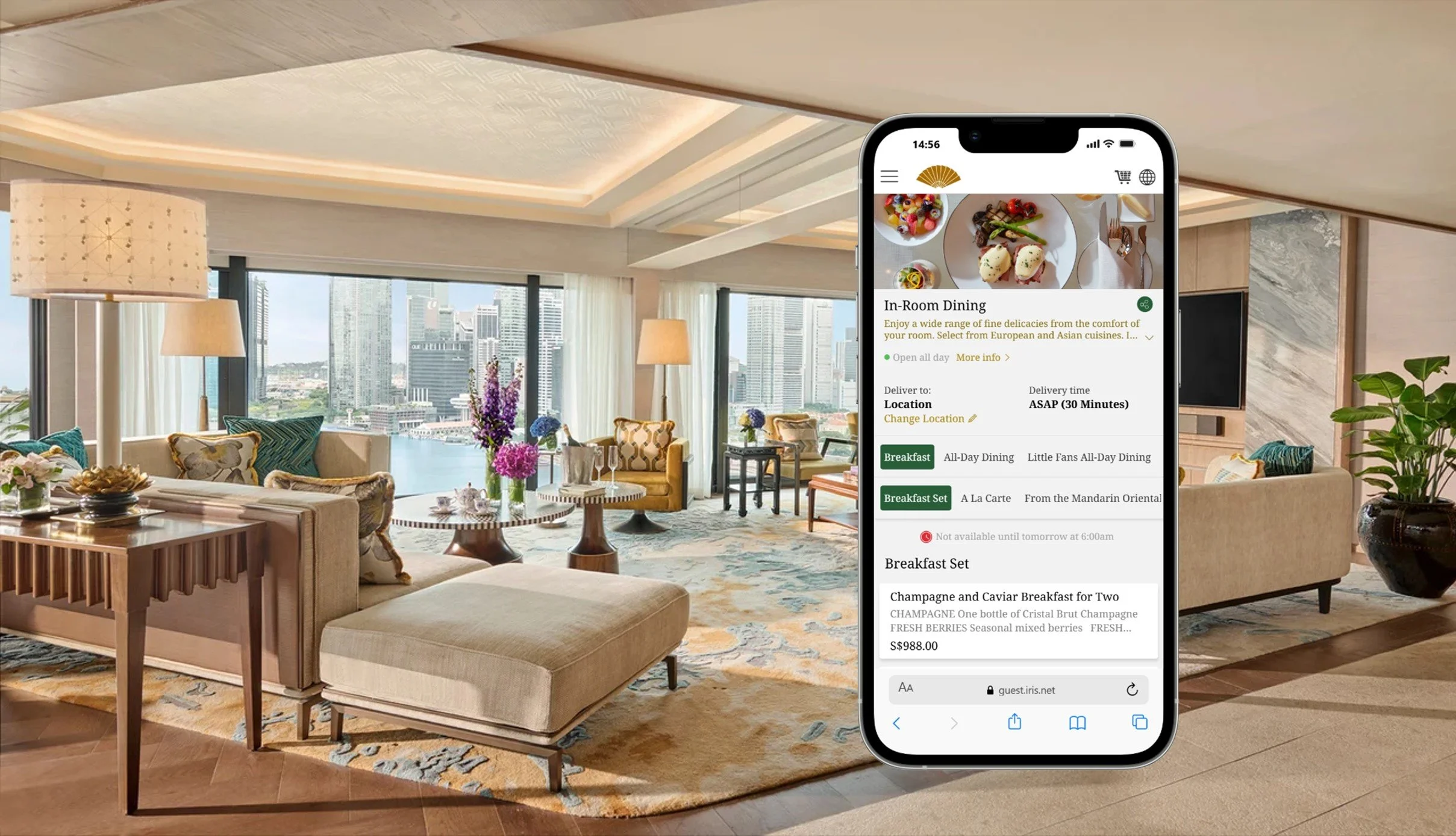
See what mobile ordering can do for your property
Used by leading hotel groups worldwide to streamline F&B and grow revenue, mobile ordering doesn't just digitise a process; it removes the friction that's costing hotels revenue, negative reviews, and repeat guests.
Get started with IRIS here.
Learn how to boost your F&B revenue with our free guide.
Book a customised Demo to see what's possible for your hotel.
