
In the Spotlight with Johan Ohlin, Chief Technology Officer at IRIS
Leading IRIS’s development team is Johan Ohlin, a seasoned technology professional with extensive experience in the hospitality industry. In this interview with Hotel Technology News, Johan discusses the breath of our platform, it’s capabilities and future ambitions for the future of mobile tech.
Q: Can you tell us about your journey to becoming CTO at IRIS — your earlier roles, formative experiences, and what drew you to the intersection of hospitality and technology?
I first joined the IRIS team 10 years ago as a senior engineer, a role I held for several years before becoming Head of Architecture. I was then promoted to Chief Technology Officer in 2021.
Working in a variety of roles over the past decade has allowed me to develop a strong technical understanding of the platform from the ground up. That experience has been invaluable in shaping the strategy for the platform’s future development and in leading our team with both historical context and a clear view of our clients’ evolving needs.
The relationship between hospitality and technology has always been important, and it continues to evolve rapidly. I’ve always enjoyed solving challenges and building solutions, and the hospitality sector has certainly faced many challenges in recent years. Technology has played a pivotal role in helping hotels address them, and being able to contribute to those solutions at IRIS is something I am deeply proud of.

How has your engineering and leadership background shaped your approach to developing technology that truly elevates the guest experience?
The foundation of any new solution or feature within the IRIS platform is a solid understanding of both guest expectations and the hotel’s operational capabilities. Our focus is always on how and where we can add value to align those two effectively and ensure the platform delivers operational efficiency and revenue impact.
I draw on the experience I’ve gained during my time at IRIS, together with my engineering background, to take a practical and holistic approach to every solution we develop. It is also essential to consider the broader ecosystem, as we integrate with multiple platforms across different hotel environments, so it is never a case of one integration and the job is done.
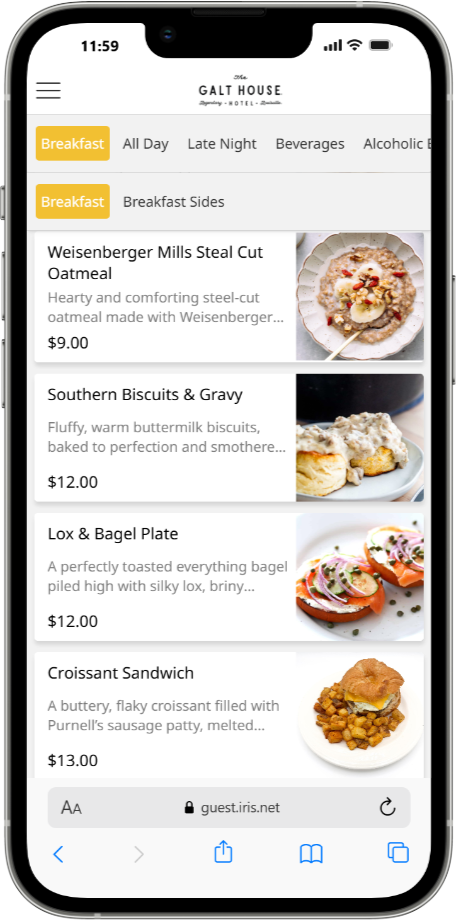
Operators and guests often face a range of challenges they want solved - for example, language differences and the need for translation. Our system supports translated menus to help guests understand their options and interact more seamlessly with hotel services, which enhances the overall experience. Keeping a clear focus on the underlying guest or operator requirement throughout the development process is crucial to delivering the right outcomes.
What first attracted you to IRIS, and what aspects of the company’s mission continue to inspire you today?
What first attracted me to IRIS, and what remains just as true today, is its mission not only to create innovative guest experiences but also to help hotels elevate those experiences, optimise operations, and drive revenue.
As a company, we are firmly committed to reimagining hospitality and moving the sector forward, and that mission shapes every aspect of our work. As a technology solutions provider, our role is to connect hotels with their guests in ways they cannot easily achieve on their own.
Operators are responsible for managing a wide array of systems -the PMS and POS being just two- and in many cases those systems don’t communicate; they simply coexist. Where we add real value is in connecting them in a new way and providing a user interface that allows guests to access multiple hotel products and services seamlessly.
That approach delivers a genuine win-win. Guests feel their needs are being met, and hotels can now fulfil those needs while driving revenue. For us, it is hugely rewarding to know that our solution makes such a meaningful operational and financial impact.
In simple terms, what problem is IRIS ultimately solving for hoteliers?
At its core, IRIS enables hotels to build a stronger connection with the guest, drive operational efficiency, reduce friction, increase orders and revenue, and ultimately enhance the overall guest experience.
We bring the hotel closer to the guest and help bridge staffing gaps without compromising service standards, guest satisfaction, or revenue performance.

What do you consider the biggest differentiator of IRIS’s digital F&B and guest experience platform from competing systems in the market?
There are several core attributes that set us apart.
The first is our longevity. We have been in the market since 2010, giving us deep practical insight into what works and where mobile ordering can deliver the most value.
That experience has been instrumental in shaping the roadmap for every new solution we develop.
Operationally, we can also connect directly to several different POS systems.
The POS landscape is varied and complex, and many mobile ordering platforms can work with only one or a small number of systems, often managing only one update at a time. Because of our longevity and our commitment to supporting a global client base, we understand how multiple POS systems operate, allowing us to support updates across them quickly and efficiently.
Perhaps the biggest differentiator, though, is the impact we deliver on client operations and revenues. Earlier this year we reported that we now process more than $250 million in orders annually. It’s quite a bit higher than that now. Most clients see revenue increases of over 20% after deployment with guest demand for mobile ordering accelerating rapidly. We are helping hotels keep pace.
Hotels often manage complex operations across multiple outlets, menus, and service models. How does IRIS help simplify this complexity at both the front- and back-of-house levels?
Across the platform we offer solutions that support the full breadth of a hotel’s operations, not only F&B mobile ordering but also guest directory features and concierge requests.
The IRIS platform is multi-functional, and that ethos has enabled us to transform mobile ordering for hoteliers by delivering a genuinely digital end-to-end experience.
From a front-of-house perspective, guests can browse, order, and pay for a wide range of items and services from multiple outlets at a time and location that suits them, without waiting for staff assistance.
From a back-of-house perspective, orders and payments can be processed more efficiently and with fewer errors, reducing friction and easing staff pressure. This is particularly valuable during peak periods, when operational complexity is highest.
What key engineering or product design choices allow IRIS to serve such a broad spectrum of properties, from boutique independents to global luxury brands?
Throughout the R&D process for any new product or solution, we focus not only on internal development but also on our external connectivity and integrations with other systems in the market. As mentioned earlier, maintaining the breadth and scale of our POS system integrations is a key priority.
We also connect to a large number of PMS systems, which enables us to validate in-room dining orders before fulfilment. This ensures the guest is checked in and authorised to charge items to the room, reducing the risk of fraud.
To support both boutique independents and large global brands, we have remained agile so we can scale where and when required. The mobile ordering landscape is complex, and there is no one-size-fits-all solution.
To address these varied needs, we have a carefully designed hierarchy in place. Independent properties can configure order permissions as they choose, while groups can introduce a brand level to allow multiple properties to manage their menus. Global brands can then apply group-level rules across all three tiers, enabling or disabling features according to their individual or organisational requirements.
IRIS solutions have delivered impressive ROI metrics for hotels such as The Westin Resort Nusa Dua, The Ned London, and Ritz-Carlton Dubai. From your perspective, what specific capabilities or innovations have driven those results?
On average, IRIS customers see a 20% to 40% uplift in F&B revenue after deployment, driven by several factors. Core to this is the platform’s functionality and its ability to scale and adapt to the needs of both independent hotels and large groups, supported by our expanding set of direct integrations with leading POS, SOS, and payment providers worldwide.
Equally important is the breadth of our offering and our ongoing commitment to innovation. We continually invest in new capabilities that strengthen and extend what clients can deliver.
Recent enhancements include Charge to Room, which makes payments seamless for in-house guests; Related Items, which boosts spend by suggesting complementary products; Advance Ordering, which lets guests schedule orders before arrival; and Digital Staff Ordering, which streamlines service for teams—particularly in venues blending traditional table service with mobile technology. These are just a few examples.
How do you work with client hotels to ensure technology adoption and staff engagement once a new IRIS solution goes live?
We have a dedicated onboarding team, so whenever we bring on a new client, they are deployed to support the hotel throughout the entire setup process. Their role is to ensure staff are fully trained and understand how and where to use the platform across all levels of operation.
From a guest perspective, to encourage engagement we also advocate for QR code menus to be placed throughout the hotel. This approach consistently drives higher levels of guest interaction, order volume, and revenue, helping hotels achieve a stronger return on their investment in the platform.
How do you evaluate which technology partners make sense for IRIS to collaborate with?
We consider two main criteria. As a CTO, I focus on technologies and solutions that enhance functionality and provide meaningful choice for both guests and hoteliers. We take a partnership-led approach with our customers, listening closely to where they need support—whether informed by their own operations or by guest behaviour.
Our product development is heavily guided by customer need, so we prioritise partners whose capabilities help us meet those requirements through effective alignment and integration.
Secondly, we look for partners who share our commitment to innovation, as that collective drive is essential to evolving our platform and delivering new solutions.
What’s your philosophy when it comes to open APIs and interoperability within the hospitality tech ecosystem?
I am a strong advocate for open APIs and interoperability and firmly believe that solutions work best when they communicate with one another. Ultimately, we are all working toward the same goals: greater efficiency, higher revenues, and improved guest satisfaction. Collaboration makes sense, and open APIs are central to enabling that.
The API we have developed internally is available not only to our hotel clients but also to other technology providers so the entire ecosystem can benefit. At the same time, it is essential that operating standards are in place and consistently maintained to ensure these integrations perform at their highest potential.
Many hotel brands report higher guest spend and improved upsell success after implementing IRIS. How does your platform identify and recommend relevant offers to guests in real time?
Rather than accessing specific guest data - which we do not hold due to GDPR - we use menu item data to inform and generate upsell recommendations, a method that has proven highly effective.
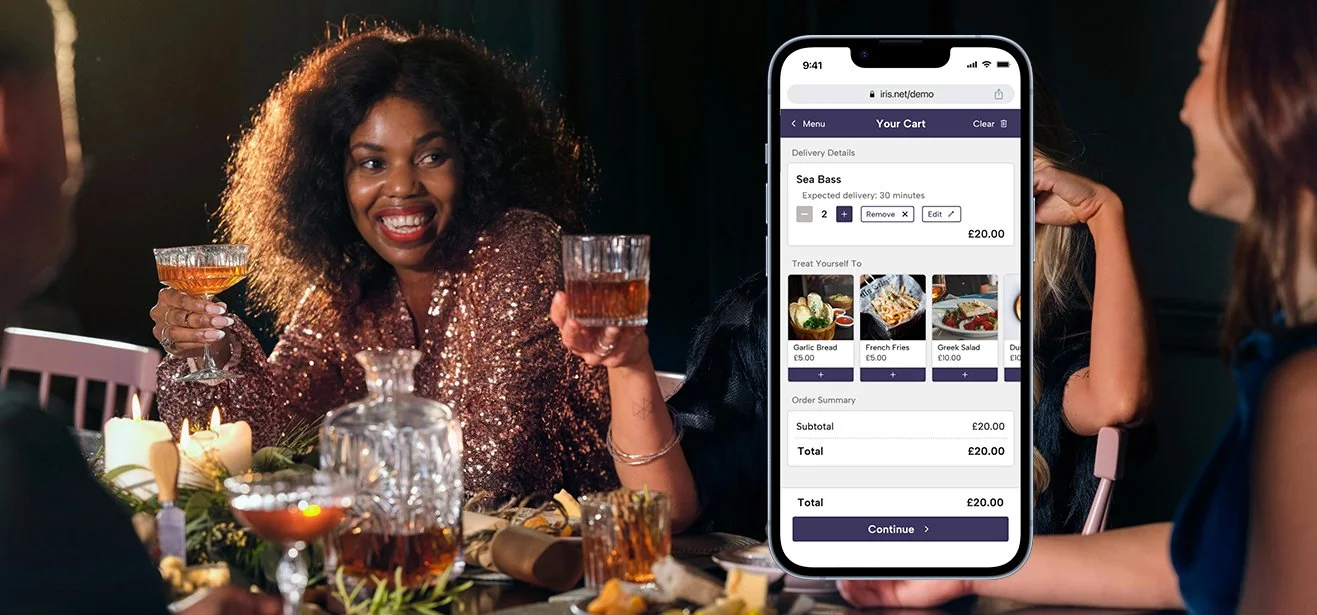
For example, many items can have associated products tagged so that when a guest selects one, a prompt suggests complementary options, whether that is side dishes for a burger or a wine pairing for a particular entrée.
In addition to client input on which items should be included in upsell journeys, we also review previous ordering patterns to identify items frequently purchased together, enabling more tailored recommendations. With advances in AI and data processing, the ambition is to extend both our own and our clients’ upsell capabilities even further in the future.
Here’s some hotel examples of clients that have boosted guest spend:
The average check size at JW Marriott® Phoenix Desert Ridge Resort & Spa has soared by 40% compared to traditional ordering thanks to upsells (fries, salads, sauces, drink pairings etc.) which encourage guests to increase their order size.
At The Westin Resort Nusa Dua, Bali average guest checks are 30% higher with digital ordering compared to call down orders. The complementary upsells (like sides and drinks) tempt guests to order more per transaction, driving up revenue. Sales of items like local wine and beers have soared since they’ve been added as a recommended accompaniment to a dish.
Security and data privacy are critical in today’s environment. How does IRIS protect sensitive guest and payment information while maintaining a seamless digital experience?
From an internal operations perspective, we do not store guest data, and within our own logs we purge information at regular intervals, so it is never retained longer than necessary. This reduces risk, ensures data is consistently reviewed, and helps maintain strong safeguards around protection and governance.
In addition, we are accredited to ISO 27001:2022 certification standards, which formally recognises the robustness of our information security management practices. This demonstrates our commitment to maintaining a secure platform and ensuring that both guest and operator data is handled in line with globally recognised standards.
As CTO, how do you balance speed of innovation with the need for reliability, scalability, and security across a global client base?
We are committed to ongoing innovation, but we also recognise the importance of maintaining a robust and reliable foundation. To achieve this balance, our development team is structured into two dedicated streams: one focused on strengthening and evolving our core platform, and the other dedicated to advancing new features and capabilities. This ensures we innovate responsibly while preserving the stability our clients depend on.
Given the pace of change across the hospitality technology sector and the scale of the systems involved, there is a continual need to update and refine our platform to avoid becoming a legacy solution. At the same time, compliance and security remain non-negotiable, so we have dedicated teams responsible for maintaining these standards across the business.
On a practical level, this includes routinely conducting vulnerability scans and stress tests to ensure our systems remain robust and secure. With the rapid advancement of AI, we expect these safeguards to become even more critical, helping us—and the wider industry—maintain the necessary level of operational readiness.
What key performance metrics do you use to measure success—both for hotel clients
We use a range of metrics to measure success, reflecting the volume and complexity of the data we work with. From a client perspective, this includes not only the number of new hotels we onboard but, importantly, when they go live. It is once the platform is operational that we can analyse order and revenue data and clearly demonstrate the value we deliver.
Internally, we continually review the performance of our integrations to understand where we can drive further efficiency and improve overall system behaviour. We also conduct internal surveys to gather insights from our team and from hotel operators. As we cannot engage directly with the guest end user, hotels act as the conduit for that feedback. Their perspective is critical, as guests see the digital experience as part of the hotel brand, not a separate IRIS product. This operator-driven insight is invaluable in helping us understand what resonates and where we can enhance the platform further.
What lessons have you learned from IRIS’s international deployments across diverse markets such as the Middle East, Europe, and North America?
We have learned a wide range of lessons given the scale of our deployments and the diversity of cultures and levels of digital adoption. In Europe, fiscalisation - particularly the handling of payments and revenue reporting - is a major focus, and the requirements vary by country. Operating in the cloud means we must invest significant time in understanding and complying with each market’s legal and regulatory frameworks.
In North America, for example, each state has its own tax rules, so ensuring compliance there is equally critical. Our connectivity with multiple POS systems allows us to support hoteliers in meeting these obligations accurately. As a global provider, maintaining a clear and current understanding of tax requirements, regulations, licensing, cultural nuances, and differing guest expectations is essential to delivering effectively for our customers.
How do you see IRIS’s mobile ordering and digital guest experience capabilities evolving with advances in AI, personalization, and predictive analytics?
AI will unquestionably shape the future, and importantly for hotels using mobile ordering, guests are already comfortable adopting more digital touchpoints throughout their stay. In terms of the next phase of evolution, guest expectations around personalisation in particular are increasing all the time.
We are focused on how we can apply that data to qualify and enhance a more automated and equally personalised approach for the guest. For example, enabling blind customers to dictate an F&B order so that AI can the automatically process menu upsell recommendations.
From a predictive analytics perspective, applying weather data on the back end to influence menu suggestions and prompts is another active area. For instance, if a cold snap is forecast, the system can trigger rules that promote hot drink recommendations to help hotels maximise seasonal upsell opportunities.
Can you share an example of how AI or automation is currently being applied to improve either hotel operations or guest interactions within the IRIS platform?
AI is certainly part of our roadmap, but we have a responsibility to our hotel clients and their guests to ensure we are applying the right tools in the right way. As such, we are currently reviewing and testing a range of solutions before determining which ones to advance into the next phase of our product development. AI tools and products within the IRIS product family
will, initially, be optional no-cost add ons. Not all our global groups want AI in their data sets! We are taking a considered and appropriate approach.
As hotels continue to emphasize ancillary revenue, what new monetisation opportunities are emerging through digital ordering and guest engagement technologies?
Often, hoteliers want to ensure they are offering guests as comprehensive a product and service menu as possible, not only to enhance the experience but also to create more opportunities for guests to order and drive revenue. On that basis, the broader the range of ancillary items and options available, the better digital ordering and guest engagement technologies will perform in terms of revenue and profitability. The more open APIs an operator’s tech stack can access, the easier it is for a platform like IRIS to connect to complementary services and help maintain internal ancillary revenue
streams. Ideally, the hotel app becomes the go-to destination for all guest needs—and once there, they stay there. As more open APIs enter the market, the opportunity to expand and optimise ancillary revenue will only accelerate.
IRIS processes more than $250 million in annual transactions. What infrastructure or system enhancements have been most important to support that kind of scale?
At its core it is access to, and availability of, the cloud which has really been a key part of our ability to scale up in recent years. A significant proportion of our customer base is in the US. Thanks to our cloud-based infrastructure, we can monitor live activity across our servers and identify peak operating periods in real time. We can then automatically scale up capacity by activating additional servers as needed, ensuring demand is met and both operators and their guests receive uninterrupted, 24/7 support.
What insights have you gained from client feedback loops or data analysis that have influenced recent product decisions?
Our partnership approach means feedback and data analysis are constant priorities. Operator and guest demands evolve quickly, so ensuring that the features we develop are fit for purpose relies heavily on timely client input. For many clients, it is only once our platform is in place and integrated with other systems in their tech stack - such as the POS, PMS, or third-party services via open APIs - that they begin requesting additional connections across their operations. Those first days and weeks
of setup are therefore crucial, as they allow us to ensure the platform is performing at its fullest potential and delivering strong ROI. We welcome connection suggestions from clients, as they reinforce the value they see in our role within their broader operational ecosystem.
How do you see guest expectations changing when it comes to digital interaction in luxury versus midscale segments - and how is IRIS addressing that evolution?
A key point of comparison between midscale and luxury segments is the adoption and use of QR codes. Midscale operators have generally been quicker to implement them than luxury, high-end brands. Our focus now is on supporting luxury operators in expanding their digital capabilities and guest interactions. To achieve this, we are enhancing how and where our
platform can appeal to luxury-segment guests at the front end. This includes offering additional options and functionality around upsell recommendations—such as wine pairings with menu items—and providing operators with tools to elevate the presentation of their menus. Customisation features that allow menus to reflect a property’s brand identity and luxury positioning are central to this evolution. IRIS has invested heavily to ensure its platform and guest facing applications can quickly and easily be integrated within the Hotel Apps often used in the luxury segment. Three of the world’s most luxurious independent brands have IRIS seamlessly integrated to better serve their guests F&B needs.
Finally, what’s next for IRIS? What will the next generation of your platform look like and how do you envision your team continuing to push the boundaries of digital hospitality?
There is a great deal underway, as we are currently in the research and development phase for a range of new features. More broadly, we are focused on moving toward a more module-based model, giving operators greater flexibility to extend and integrate our platform to suit their specific needs. In simple terms, it will offer a more “pick and mix” approach, providing
operators with more choice in how they deploy and apply the IRIS platform. AI will certainly be another core focus, and we are actively exploring where it can deliver the greatest value for operators through practical, solutions-based applications.
We remain committed to pushing new boundaries in digital ordering for the hotel industry, so watch this space.
